
17,005 Documents in our Technical Library
3206632 Total Downloads

Newest Additions

NASA-RP-1060 Subsonic Aircraft: Evolution and the Matching of Size to Performance
AA-CP-20212-001
AA-CP-20212-001
ADPO10769 Occurrence of Corrosion in Airframes
The purpose of this lecture is to provide an overview ...
MIL-STD-1759 Rivets and Rivet Type Fasteners Preferred for Design
The purpose of this book form standard is to provide ...
MIL-STD-810G Environmental Engineering Considerations and Laboratory Tests
This standard contains materiel acquisition program planning and engineering direction ...

AGARD-R-767

AGARD-R-767
  • Version
  • 297 Downloads
  • 70.03 MB File Size
  • 1 File Count
  • April 12, 2016 Create Date
  • April 12, 2016 Last Updated
Scroll for Details

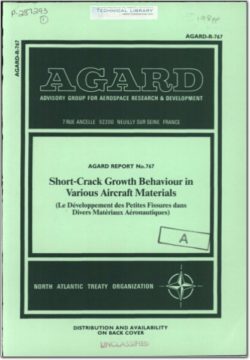
Short-Crack Growth Behaviour in Various Aircraft Materials
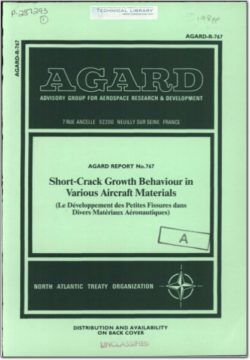
AGARD-R-767 Short-Crack Growth Behaviour in Various Aircraft Materials

An AGARD Supplemental Test Programme on the growth of “short“ fatigue cracks was conducted to allow participants
to test various materials and loading conditions that were of interest to their laboratories. Twenty-two participants from
ten laboratories in eight countries contributed to the supplemental test programme. Each laboratory submitted a paper on
their test and analysis results. and these papers are included in this AGARD publication. The objective of this paper is to
review the supplemental test programme and to summarize the results obtained from all laboratories. The materials tested
in the supplemental programme were: 2024-T3 and 7075-T6 aluminum alloys, 2090-T8E41 aluinimnn-lithium alloy, Ti-6Al-
4V titanium alloy and 4340 steel. Tests on single-edge-notch-tension specimens were conducted under several constant-
amplitude loading conditions (stress ratios of —2, —1, 0, and 0.5) and spectrum loading conditions (FALSTAFF, Inverted
FALSTAFF, GAUSSIAN, TWIST, Felix and the Fokker 100 spectra). The plastic-replica method was used to measure the
growth of short cracks at the notch root.

The results from the supplemental test programme show good agreement among the several laboratories who measured
short-crack growth rates on the aluminum-lithium alloy. In this alloy. short surface cracks at a notch grew under mixed-mode
conditions (usually 30 to 35 degrees from the loading axis). All materials exhibited a “short-crack" effect to some extent.
The effect was much less evident in the 4340 steel than in the other materials. For the aluminum, aluminum-lithium, and
titanium alloys, short cracks grew at stress-intensity factor ranges lower, and in some cases much lower, than the thresholds
obtained from long-crack tests under the same loading conditions. The short-crack effects were more pronounced as the stress
ratio became more negative. This applied for both constant-amplitude and spectrum loading. For the 2024-T3 aluminum
alloy and the 2090 aluminum-lithium alloy, the short surface cracks grew equal to or faster than long cracks when subjected
to the same stress ratio (except R = 0.5) and to the same stress-intensity factor range above the long-crack threshold. The
short-crack growth rates for the 7075-T6 aluminum alloy and the Ti-6Al-4V titanium alloy were equal to or slower than those
for long cracks under the same stress ratio and the same stress-intensity factor range above the long-crack threshold. The
short-crack growth rates for the 4340 steel usually agreed with the long-crack growth rates over a wide range in rates, except
for results at low growth rates and at R = —1. All materials, except 4340 steel, tested at the high stress ratio (R = 0.5)
generally showed that short cracks grew slower than long cracks above the long—crack threshold.

FileAction
AGARD-R-767 Short-Crack Growth Behaviour in Various Aircraft Materials.pdfDownload 

Comment On This Post

Your email address will not be published. Required fields are marked *

AGARD-R-767

AGARD-R-767
  • Version
  • 297 Downloads
  • 70.03 MB File Size
  • 1 File Count
  • April 12, 2016 Create Date
  • April 12, 2016 Last Updated
Scroll for Details

Short-Crack Growth Behaviour in Various Aircraft Materials

AGARD-R-767 Short-Crack Growth Behaviour in Various Aircraft Materials

An AGARD Supplemental Test Programme on the growth of “short“ fatigue cracks was conducted to allow participants
to test various materials and loading conditions that were of interest to their laboratories. Twenty-two participants from
ten laboratories in eight countries contributed to the supplemental test programme. Each laboratory submitted a paper on
their test and analysis results. and these papers are included in this AGARD publication. The objective of this paper is to
review the supplemental test programme and to summarize the results obtained from all laboratories. The materials tested
in the supplemental programme were: 2024-T3 and 7075-T6 aluminum alloys, 2090-T8E41 aluinimnn-lithium alloy, Ti-6Al-
4V titanium alloy and 4340 steel. Tests on single-edge-notch-tension specimens were conducted under several constant-
amplitude loading conditions (stress ratios of —2, —1, 0, and 0.5) and spectrum loading conditions (FALSTAFF, Inverted
FALSTAFF, GAUSSIAN, TWIST, Felix and the Fokker 100 spectra). The plastic-replica method was used to measure the
growth of short cracks at the notch root.

The results from the supplemental test programme show good agreement among the several laboratories who measured
short-crack growth rates on the aluminum-lithium alloy. In this alloy. short surface cracks at a notch grew under mixed-mode
conditions (usually 30 to 35 degrees from the loading axis). All materials exhibited a “short-crack" effect to some extent.
The effect was much less evident in the 4340 steel than in the other materials. For the aluminum, aluminum-lithium, and
titanium alloys, short cracks grew at stress-intensity factor ranges lower, and in some cases much lower, than the thresholds
obtained from long-crack tests under the same loading conditions. The short-crack effects were more pronounced as the stress
ratio became more negative. This applied for both constant-amplitude and spectrum loading. For the 2024-T3 aluminum
alloy and the 2090 aluminum-lithium alloy, the short surface cracks grew equal to or faster than long cracks when subjected
to the same stress ratio (except R = 0.5) and to the same stress-intensity factor range above the long-crack threshold. The
short-crack growth rates for the 7075-T6 aluminum alloy and the Ti-6Al-4V titanium alloy were equal to or slower than those
for long cracks under the same stress ratio and the same stress-intensity factor range above the long-crack threshold. The
short-crack growth rates for the 4340 steel usually agreed with the long-crack growth rates over a wide range in rates, except
for results at low growth rates and at R = —1. All materials, except 4340 steel, tested at the high stress ratio (R = 0.5)
generally showed that short cracks grew slower than long cracks above the long—crack threshold.

FileAction
AGARD-R-767 Short-Crack Growth Behaviour in Various Aircraft Materials.pdfDownload 
17,005 Documents in our Technical Library
3206632 Total Downloads

Search The Technical Library

Newest Additions

NASA-RP-1060 Subsonic Aircraft: Evolution and the Matching of Size to Performance
AA-CP-20212-001
AA-CP-20212-001
ADPO10769 Occurrence of Corrosion in Airframes
The purpose of this lecture is to provide an overview ...
MIL-STD-1759 Rivets and Rivet Type Fasteners Preferred for Design
The purpose of this book form standard is to provide ...
MIL-STD-810G Environmental Engineering Considerations and Laboratory Tests
This standard contains materiel acquisition program planning and engineering direction ...