
AGARD-LS-189
- Version
- 98 Downloads
- 8.53 MB File Size
- 1 File Count
- April 26, 2016 Create Date
- April 26, 2016 Last Updated
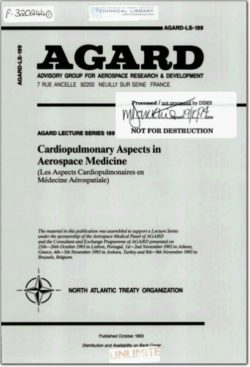
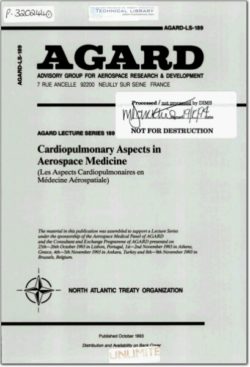
Cardiopulmonary Aspect in Aerospace Medicine
In 1987, the AGARD Aeromedical Panel (AMP)
sponsored a Short Course on the Cardiopulmonary
Aspects of Aerospace Medicine (1). The aim of the
course was to disseminate current information about
the aeromedical implications of cardiac and
pulmonary conditions to NATO Flight Surgeons.
At the time of the first course, it was proposed that an
update course be run every five to six years to keep
NATO Flight Surgeons abreast of current
developments in aviation cardiology and pulmonology.
Since the 1987 Lecture Series, there have been a
number of new developments in aviation cardiology.
The purpose of this Lecture Series is to disseminate
this information.
Cardiovascular disease is the most common cause of
morbidity and mortality in persons of aircrew age in
developed nations and is the largest medical reason
for removing aircrew from flying duties in most
published series (2, 3 ). The incidence of pulmonary
disease is smaller but the magnitude of these
problems in NATO aircrew has not been documented.
In preparation for this Lecture Series, a questionnaire
was sent to an AMP representative from each of the
NATO countries. The questionnaire sought
information concerning the
cardiopulmonary disease in NATO aircrew in the
calendar year 1991. Methods and frequency of
screening for cardiologic and pulmonary disease was
also requested.
Information was received from 14 aeromedical
agencies in 12 countries providing a denominator of
87665 aircrew. This total represents responses only
from those agencies from which sufficient data was
available. Although the questionnaire requested
information on pilots only, some agencies included
information on other aircrew who undergo regular
periodic screening and this data has been included in
the database.
The rapid acquisition of this large database
denominator demonstrates the significant
epidemiologic power available when data from NATO
agencies is combined.
While it is reassuring to discover that the incidence of
medical grounding is low, given the very high cost of
training aircrew to operational readiness, there
remains a significant challenge to research and
identify the scientific rationale for grounding or
restricting aircrew because of cardiac or pulmonary
disorders.
| File | Action |
|---|---|
| AGARD-LS-189 Cardiopulmonary Aspect in Aerpspace Medicine.pdf | Download |
Comment On This Post