
17,005 Documents in our Technical Library
3180532 Total Downloads

Newest Additions

NASA-RP-1060 Subsonic Aircraft: Evolution and the Matching of Size to Performance
AA-CP-20212-001
AA-CP-20212-001
ADPO10769 Occurrence of Corrosion in Airframes
The purpose of this lecture is to provide an overview ...
MIL-STD-1759 Rivets and Rivet Type Fasteners Preferred for Design
The purpose of this book form standard is to provide ...
MIL-STD-810G Environmental Engineering Considerations and Laboratory Tests
This standard contains materiel acquisition program planning and engineering direction ...

AGARD-R-761

AGARD-R-761
  • Version
  • 251 Downloads
  • 65.42 MB File Size
  • 1 File Count
  • April 12, 2016 Create Date
  • April 12, 2016 Last Updated
Scroll for Details

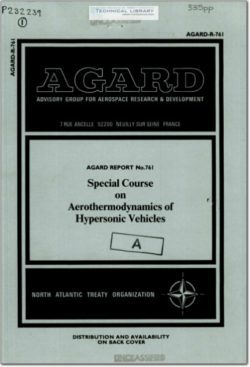
Special Course on Aerothermodynamics of Hypersonic Vehicles
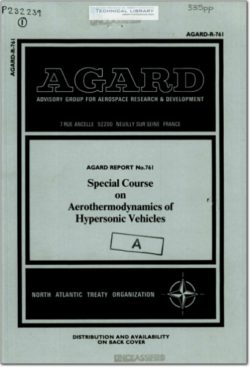
AGARD-R-761 Special Course on Aerothermodynamics of Hypersonic Vehicles

The hypersonic domain is a large and poorly defined regime in which many potential
systems can operate. These systems can vary widely from one another in both
characteristics and required technologies for their implementation. In the United States
there are at least five points of focus in hypersonics. each with a distinctive product
and each pursuing that technology necessary to develop the product. These five study
areas are (l) the study of lifting entry from low Earth orbits; (2) the study of
efficient return from high energy orbits, the so called AOTV focus. (3) the study of
ballistic entry. (4) the study of ballistic defense and (5) the study of entry into the
atmospheres of other planetary bodies. Beyond these major categories, there are many sub-
categories including the design of hypervelocity munitions and the study of hypervelocity
anti-aircraft techniques. While this lecture will center on the evaluation of lifting,
orbital entry from low Earth orbit. the point to be made is that this selected class of
vehicles defines only one class of technologies; others are equally important to those
who define hypersonic systems differently.

The hypersonic envelope is poorly defined. It starts at a Mach number like 5 and extends
to a Mach number or velocity as high as need. the imagination and technology will allow.
Likewise the envelope starts at the extent of the sensible atmosphere (a debatable
dimension within the engineering connotation) and extends downward to the surface of a
planet (normally but not exclusively Earth). Within that broadly defined environment the
vehicle scale and angle of attack are important modifiers in the characteristics of
hypersonic systems.

Operating angle of attack defines the fundamental relationships between the level of
pressure drag and viscous drag forces; a significant parameter in understanding the
complexity of the methodologies employed in the development process for such
configurations. This relationship is modified by scale of the configuration. Angle of
attack also impacts the relative importance of real gas effects on both the aerodynamics
and materials aspects of the configuration. This lecture will concentrate on the
requirements implicit in the design of lifting hypersonic systems as the operating angle
of attack and the scale of these-systems are systematically varied.

FileAction
AGARD-R-761 Special Course on Aerothermodynamics of Hypersonic Vehicles.pdfDownload 

Comment On This Post

Your email address will not be published. Required fields are marked *

AGARD-R-761

AGARD-R-761
  • Version
  • 251 Downloads
  • 65.42 MB File Size
  • 1 File Count
  • April 12, 2016 Create Date
  • April 12, 2016 Last Updated
Scroll for Details

Special Course on Aerothermodynamics of Hypersonic Vehicles

AGARD-R-761 Special Course on Aerothermodynamics of Hypersonic Vehicles

The hypersonic domain is a large and poorly defined regime in which many potential
systems can operate. These systems can vary widely from one another in both
characteristics and required technologies for their implementation. In the United States
there are at least five points of focus in hypersonics. each with a distinctive product
and each pursuing that technology necessary to develop the product. These five study
areas are (l) the study of lifting entry from low Earth orbits; (2) the study of
efficient return from high energy orbits, the so called AOTV focus. (3) the study of
ballistic entry. (4) the study of ballistic defense and (5) the study of entry into the
atmospheres of other planetary bodies. Beyond these major categories, there are many sub-
categories including the design of hypervelocity munitions and the study of hypervelocity
anti-aircraft techniques. While this lecture will center on the evaluation of lifting,
orbital entry from low Earth orbit. the point to be made is that this selected class of
vehicles defines only one class of technologies; others are equally important to those
who define hypersonic systems differently.

The hypersonic envelope is poorly defined. It starts at a Mach number like 5 and extends
to a Mach number or velocity as high as need. the imagination and technology will allow.
Likewise the envelope starts at the extent of the sensible atmosphere (a debatable
dimension within the engineering connotation) and extends downward to the surface of a
planet (normally but not exclusively Earth). Within that broadly defined environment the
vehicle scale and angle of attack are important modifiers in the characteristics of
hypersonic systems.

Operating angle of attack defines the fundamental relationships between the level of
pressure drag and viscous drag forces; a significant parameter in understanding the
complexity of the methodologies employed in the development process for such
configurations. This relationship is modified by scale of the configuration. Angle of
attack also impacts the relative importance of real gas effects on both the aerodynamics
and materials aspects of the configuration. This lecture will concentrate on the
requirements implicit in the design of lifting hypersonic systems as the operating angle
of attack and the scale of these-systems are systematically varied.

FileAction
AGARD-R-761 Special Course on Aerothermodynamics of Hypersonic Vehicles.pdfDownload 
17,005 Documents in our Technical Library
3180532 Total Downloads

Search The Technical Library

Newest Additions

NASA-RP-1060 Subsonic Aircraft: Evolution and the Matching of Size to Performance
AA-CP-20212-001
AA-CP-20212-001
ADPO10769 Occurrence of Corrosion in Airframes
The purpose of this lecture is to provide an overview ...
MIL-STD-1759 Rivets and Rivet Type Fasteners Preferred for Design
The purpose of this book form standard is to provide ...
MIL-STD-810G Environmental Engineering Considerations and Laboratory Tests
This standard contains materiel acquisition program planning and engineering direction ...