
AGARD-LS-197
- Version
- 263 Downloads
- 52.37 MB File Size
- 1 File Count
- April 25, 2016 Create Date
- April 25, 2016 Last Updated
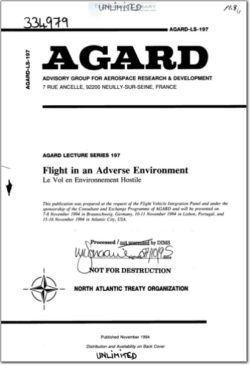
Flight in an Adverse Environment
The series begins with a presentation on wake
turbulenCe which treats the generation and
decay of trailing vortex systems. The hazard
to sir/taller aircraft encountering a wake from
a larger aircraft is considered followed by
recommendations for avoidance and alleviation
of“ the hazard.
Next, as a lead-in to the remainder of the
material which follows, a lecture is presented
which presents the results of an extensive
flight test program concerning winter storms
off of the east coast. of Canada and their
effect. on aircraft. operations. The Canadian
Atlantic Storms Program (CASP) includes the
effects of airframe icing, strong winds,
turbulence, wind shear, precipitation, reduced
visibility, reduced ceilings and electrification.
The next presentation is one specific to
electromagnetic effects including electrical
discharge properties, in~flight test programs,
iii—flight lightning models, and lightning
sirmilation techniques.
The many aspects of icing is the t0pic of the
next lecture. It includes information on the
physics of icing, the hazard to aircraft and ice
protection systems including de-icing and
anti-icing.
Wind shear is the next hazard of the flight.
environment to be covered in some detail.
This specific topic will be defined and its
cause explained. The response of an aircraft
to wind shear is discussed together with
methods of detecting and quantifying this
natural hazard. Some guiding principles for
the pilot operating under conditions where
wind shear may be present are also presented.
Next, heavy rain effects are covered including
the general effects of heavy rain on aircraft
systems and performance, the physical
characteristics of heavy rain and the frequency
of occurrence. Full-scale and model tests
conducted in heavy rain are described and an
analysis given of the results on aerodynamic
performance and operations.
The series concludes with a presentation on
the effects of gusts and turbulence on an
aircraft. The principal topics include a
description of random turbulence and discrete
gusts, the measurement of atmospheric
turbulence, and aircraft. response to
turbulence. The presentation will include
engineering models and examples of aircraft.
response to random turbulence and discrete
gusts.
| File | Action |
|---|---|
| AGARD-LS-197 Flight in an Adverse Environment.pdf | Download |
Comment On This Post