17,005 Documents in our Technical Library
3193345 Total Downloads

Newest Additions

NASA-RP-1060 Subsonic Aircraft: Evolution and the Matching of Size to Performance
AA-CP-20212-001
AA-CP-20212-001
ADPO10769 Occurrence of Corrosion in Airframes
The purpose of this lecture is to provide an overview ...
MIL-STD-1759 Rivets and Rivet Type Fasteners Preferred for Design
The purpose of this book form standard is to provide ...
MIL-STD-810G Environmental Engineering Considerations and Laboratory Tests
This standard contains materiel acquisition program planning and engineering direction ...

AGARD-LS-195

AGARD-LS-195
  • Version
  • 370 Downloads
  • 66.38 MB File Size
  • 1 File Count
  • April 12, 2016 Create Date
  • April 12, 2016 Last Updated
Scroll for Details

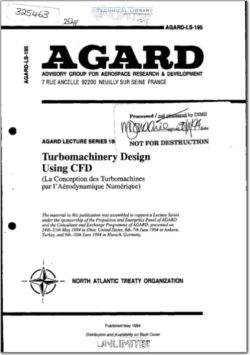
Turbomachinery Design Using CFD

AGARD-LS-195 Turbomachinery Design Using CFD

The trend in the aircraft gas turbine engines is
towards energy efficient, compact, lightweight systems.
In terms of propulsion parameters the goal is to increase
the thermal efficiency, the specific power and specific
weight. Higher thermal efficiency means lower specific
fuel consumption and it is a direct function of the
overall cycle pressure ratio and thermodynamic effi~
ciencies of individual components. The specific power
primarily depends on the maximum cycle temperature.
Lightweight and high strength materials and reduced
number of turbomachinery stages are the primary ele-
ments for obtaining higher specific weight. The key
technology area for achieving aerodynamic efficiency
and increased stage pressure ratio that lead to fewer
stages is the use of Computational Fluid Dynamics
(CFD) methods in the aerodynamic design process.

Design methods that use CFD techniques pro-
duce competitive advantages by increasing the speed of
the design cycle, reducing the testing time and therefore
the necessary investment. Design of a turbomachine
was highly empirical and it required extensive develop
ment testing. As computers and their associated design
software became tools of design offices, development
time reduces appreciably. CFD improves the design
techniques when used in making computational ex-
periments to understand the flow physics. The applica-
tion of computational techniques to the design started in
the offices of the aero-engine designers because of the
strict requirements of the engines designed to fly. Later
computational techniques and CFD codes disseminated
into the land based turbomachinery industries.

CFD codes solve the fluid flow equations at
many different levels of approximation. By computing
the flow field they are capable of simulating and analyz~
ing the flow as accurate as the approximations permit.
The application of analysis codes in the design process
is done by using the code iteratively for optimizing the
component geometry to achieve the desired level of per-
formance. The effectiveness of the process depends on
the background and experience of the designer.

FileAction
AGARD-LS-195 Turbomachinery Design Using CFD.pdfDownload 

Comment On This Post

Your email address will not be published. Required fields are marked *

AGARD-LS-195

AGARD-LS-195
  • Version
  • 370 Downloads
  • 66.38 MB File Size
  • 1 File Count
  • April 12, 2016 Create Date
  • April 12, 2016 Last Updated
Scroll for Details

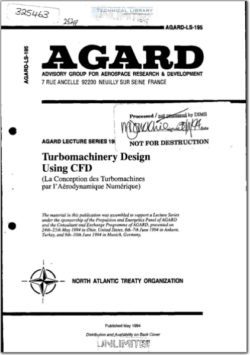
Turbomachinery Design Using CFD

AGARD-LS-195 Turbomachinery Design Using CFD

The trend in the aircraft gas turbine engines is
towards energy efficient, compact, lightweight systems.
In terms of propulsion parameters the goal is to increase
the thermal efficiency, the specific power and specific
weight. Higher thermal efficiency means lower specific
fuel consumption and it is a direct function of the
overall cycle pressure ratio and thermodynamic effi~
ciencies of individual components. The specific power
primarily depends on the maximum cycle temperature.
Lightweight and high strength materials and reduced
number of turbomachinery stages are the primary ele-
ments for obtaining higher specific weight. The key
technology area for achieving aerodynamic efficiency
and increased stage pressure ratio that lead to fewer
stages is the use of Computational Fluid Dynamics
(CFD) methods in the aerodynamic design process.

Design methods that use CFD techniques pro-
duce competitive advantages by increasing the speed of
the design cycle, reducing the testing time and therefore
the necessary investment. Design of a turbomachine
was highly empirical and it required extensive develop
ment testing. As computers and their associated design
software became tools of design offices, development
time reduces appreciably. CFD improves the design
techniques when used in making computational ex-
periments to understand the flow physics. The applica-
tion of computational techniques to the design started in
the offices of the aero-engine designers because of the
strict requirements of the engines designed to fly. Later
computational techniques and CFD codes disseminated
into the land based turbomachinery industries.

CFD codes solve the fluid flow equations at
many different levels of approximation. By computing
the flow field they are capable of simulating and analyz~
ing the flow as accurate as the approximations permit.
The application of analysis codes in the design process
is done by using the code iteratively for optimizing the
component geometry to achieve the desired level of per-
formance. The effectiveness of the process depends on
the background and experience of the designer.

FileAction
AGARD-LS-195 Turbomachinery Design Using CFD.pdfDownload 
17,005 Documents in our Technical Library
3193345 Total Downloads

Search The Technical Library

Newest Additions

NASA-RP-1060 Subsonic Aircraft: Evolution and the Matching of Size to Performance
AA-CP-20212-001
AA-CP-20212-001
ADPO10769 Occurrence of Corrosion in Airframes
The purpose of this lecture is to provide an overview ...
MIL-STD-1759 Rivets and Rivet Type Fasteners Preferred for Design
The purpose of this book form standard is to provide ...
MIL-STD-810G Environmental Engineering Considerations and Laboratory Tests
This standard contains materiel acquisition program planning and engineering direction ...